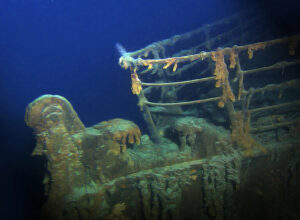
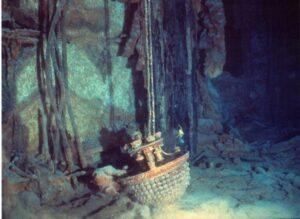
The tragic sinking of the RMS Titanic on April 15, 1912, remains one of the most compelling and agonizing chapters in modern history. On its maiden voyage from Southampton to New York, the massive ocean liner—widely touted as “unsinkable”—collided with an iceberg in the North Atlantic, claiming the lives of over 1,500 passengers and crew members.
Despite the immense loss of human life, one unsettling enigma has persisted across generations: Why were virtually no human remains ever discovered at the resting site of the ship?
Unveiling the Final Resting Place
On September 1, 1985, after decades of failed search attempts, a joint expedition led by deep-sea explorer Dr. Robert Ballard pinpointed the wreckage of the Titanic over 12,000 feet (3,800 meters) beneath the Atlantic surface, roughly 400 miles off the coast of Newfoundland, Canada. Ballard successfully traced the ship by tracking its expansive debris field—a search technique he had previously refined while locating the sunken nuclear submarine USS Scorpion in 1968.
Ballard famously pledged to treat the resting place with solemn respect, swearing never to plunder the grave site. However, subsequent recovery missions beginning in 1987 salvaged thousands of artifacts—ranging from delicate glassware to personal luggage—offering a haunting glimpse into the final moments of those aboard.
Where Did the Victims Go?
The expedition revealed that the Titanic had split in two during its descent, with the bow remaining surprisingly intact. Surrounding the two main sections was a vast 15-square-mile debris field littered with personal belongings. Yet, amidst the scattered history, researchers noticed a striking absence: there were no skeletons or human remains.
Out of more than 1,500 victims, only 337 bodies were ever recovered from the ocean surface in the weeks following the disaster by rescue vessels; 119 were buried at sea, while 209 were brought ashore to Halifax, Nova Scotia. Beneath the waves, however, the ocean floor appeared devoid of human bones.
Famed filmmaker James Cameron, who has piloted submersibles down to the wreckage 33 times—spending more time at the site than the ship’s own captain—emphasized this reality in a 2012 interview with The New York Times:
“I’ve seen zero human remains. We’ve seen clothing. We’ve seen pairs of shoes, which would strongly suggest there was a body there at one point. But we’ve never seen any human remains.”
The Science of Dissolution: Pressure, Scavengers, and Chemistry
The complete absence of skeletons deep on the ocean floor is not a supernatural anomaly, but rather the result of extreme marine biology and ocean chemistry:
1. Deep-Sea Scavengers
At depths exceeding 12,000 feet, water temperatures sit just above freezing, and water pressure reaches thousands of pounds per square inch. Under these conditions, specialized deep-sea organisms and marine bacteria quickly consume all organic soft tissue. Non-organic or chemically treated materials—such as heavy leather boots and shoes—are inedible to marine life, leaving pairs of footwear lying side-by-side on the seafloor as silent markers where bodies once lay.
2. The Calcium Carbonate Compensation Depth (CCD)
The disappearance of actual bones comes down to chemical erosion. As Dr. Robert Ballard explained to NPR, ocean water at extreme depths undergoes a fundamental chemical change:
“At depths below about 3,000 feet, you pass below what’s called the calcium carbonate compensation depth. The water in the deep sea is undersaturated in calcium carbonate, which is mostly what bones are made of. Once the critters eat the flesh and expose the bones, the bones completely dissolve.”
In contrast, bodies submerged in environments like the Black Sea remain mummified for centuries because the oxygen-depleted, hyper-saline waters lack both bone-dissolving chemistry and scavenger organisms.
The Slow Decay and Modern Tragedies
Nature’s reclaiming process extends beyond the victims to the ship itself. A unique, iron-eating bacterium dubbed Halomonas titanicae is rapidly consuming the steel hull. Oceanographers estimate that within the next few decades, the structural integrity of the Titanic will completely collapse, leaving behind only a pile of rust and durable internal fixtures.
The site re-entered global headlines in June 2023 when another tragedy unfolded in its waters. The Titan submersible, operated by OceanGate to take tourists down to view the wreckage, suffered a catastrophic implosion during its descent. All five passengers aboard lost their lives instantly, including OceanGate CEO Stockton Rush, veteran French Titanic expert Paul-Henri Nargeolet, British adventurer Hamish Harding, and Pakistani businessman Shahzada Dawood alongside his 19-year-old son, Suleman.
The mystery of the Titanic’s missing remains serves as a stark, humbling reminder of the sheer power of the oceans—where human history, cold science, and nature’s relentless forces ultimately intersect.
Jennifer Lopez and Ben Affleck Reunite on the Red Carpet After a Year Apart Hollywood’s beloved duo, Jennifer Lopez and Ben Affleck, turned heads once again as they […]
A routine departure from Charlotte Douglas International Airport turned into a major operational disruption recently. The scheduled flight from Charlotte to LaGuardia Airport was suddenly […]