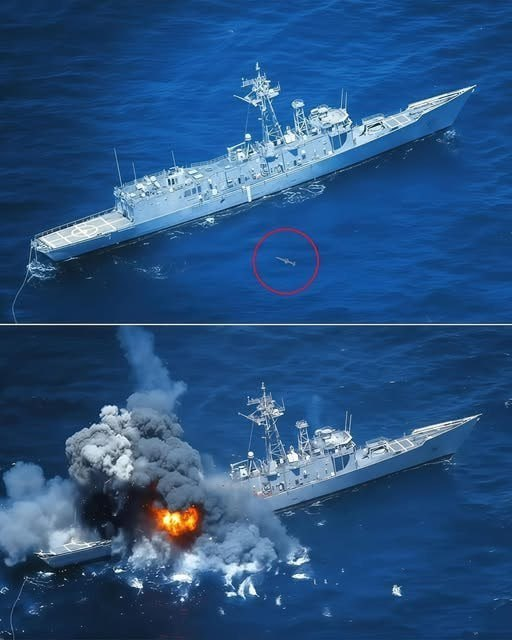
The former USS Rodney M. Davis (FFG-60), once an active guided-missile frigate of the United States Navy, met its final fate not in combat, but in a carefully planned SINKEX (sinking exercise). The vessel was deliberately sunk after being struck by an AGM-84 Harpoon anti-ship missile, marking the end of more than three decades of dedicated service. Rather than representing a wartime loss, the event served as a controlled training and evaluation operation designed to strengthen naval preparedness.
Commissioned in 1982, the ship belonged to the Oliver Hazard Perry-class frigate, a class developed during the height of the Cold War. These frigates were engineered primarily for anti-submarine warfare and escort missions, tasked with protecting carrier strike groups and merchant convoys from underwater and surface threats. Agile, versatile, and equipped with guided missiles and advanced radar systems for their time, ships of this class became a backbone of U.S. naval operations throughout the 1980s and 1990s.
Named in honor of Rodney Maxwell Davis, a Marine Corps sergeant who received the Medal of Honor for his heroism during the Vietnam War, the frigate carried a legacy of courage and sacrifice. Throughout its operational life, USS Rodney M. Davis participated in multinational exercises, maritime security patrols, counter-narcotics missions, and escort operations across the Pacific and other strategic regions. The vessel frequently worked alongside allied navies, reinforcing international cooperation and maintaining freedom of navigation in contested waters.
Before the sinking exercise took place, extensive preparations were conducted. Hazardous materials such as fuel residues, oils, and potentially harmful substances were carefully removed in accordance with environmental protection standards. Sensitive military equipment, classified systems, and reusable components were also stripped from the ship. These measures ensured that the exercise would comply with environmental regulations while maximizing the training and research value of the event.
During the exercise, the AGM-84 Harpoon missile struck its target as planned. Observers and analysts gathered critical data on weapon performance, impact effects, and ship survivability. Such exercises provide invaluable real-world insights that simulations alone cannot fully replicate. The information collected contributes to improvements in naval tactics, ship design, defensive systems, and damage control procedures for future vessels.
For former crew members, the sinking was an emotional moment. Many had spent significant portions of their careers aboard the frigate, forging bonds and memories tied to the steel decks and passageways of the ship. Watching it slip beneath the waves symbolized the end of an era. Yet within naval tradition, SINKEX operations are also seen as a final act of service — a way for a retired vessel to continue contributing to national defense even after decommissioning.
Ultimately, the controlled sinking of USS Rodney M. Davis was not merely the disposal of an aging warship. It represented a transition — from active duty to a training platform — ensuring that the lessons learned from its final mission would help shape future fleet development and enhance the readiness of the next generation of sailors and ships.