The Biological Marvel Behind an Everyday Food
The humble egg, a staple food celebrated globally for its high nutritional value, is the product of a deeply complex biological system operating inside avian bodies, particularly within domestic hens. Have you ever paused to contemplate the exact steps required to construct a single egg? The biological reality involves a highly synchronized path through the female bird’s reproductive tract, requiring a window of roughly 24 to 26 hours from start to finish.
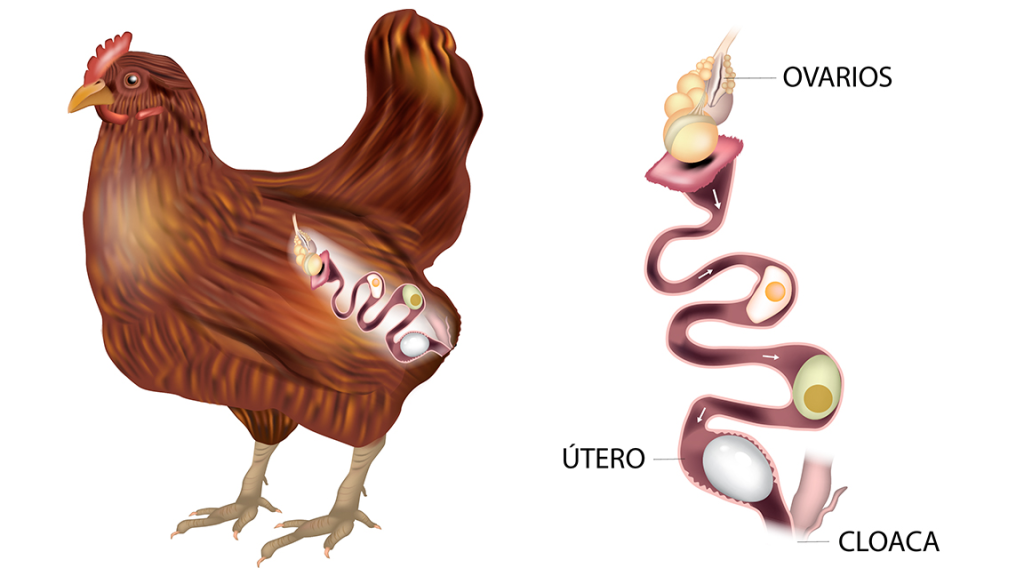
This remarkable sequence kicks off in the ovary, the anatomical site where multiple ova are cultivated. Within chickens, these developing structures are what we commonly recognize as the yellow yolks. The moment a specific yolk reaches peak maturity, it is released from the ovary and embarks on a downward migration through the oviduct—an elongated, highly specialized muscular tube partitioned into distinct biological zones.
The Stages of Construction Within the Oviduct
- The Infundibulum: In this initial gateway of the reproductive tract, the mature yolk pauses briefly, and it is at this exact point where fertilization occurs if the hen has recently mated with a rooster.
- The Magnum: Next, the yolk moves forward into the magnum section, a phase dedicated to surrounding the core with layers of dense, protein-packed egg white, biologically termed the albumen. This specific coating process demands approximately three hours of continuous development.
- The Isthmus: The growing egg then moves into the isthmus, where the animal’s body synthesizes the inner and outer protective membranes that wrap tightly around the liquid contents.
- The Uterus: Eventually, the egg enters the uterus, also widely referred to as the shell gland, where the bird’s system carefully deposits the calcium carbonate required to forge the rigid outer shell. Serving as the most time-consuming portion of the entire cycle, this calcification phase occupies between 18 and 20 hours.
The Final Release and Evolutionary Perfection
The closing act of the cycle takes place within the cloaca, the exit chamber from which the entirely completed egg is safely discharged into the world. Due to the incredible evolutionary optimization and seamless efficiency of this internal assembly line, a healthy hen possesses the ability to produce a new egg almost daily.
This organic wonder is not only deeply impressive from a scientific standpoint, but it also showcases a flawless harmony of evolutionary design, physical defense, and rich nutrition. The mineralized shell blocks external threats, the clear albumen supplies vital nourishment, and the center yolk harbors the blueprint for a potential chick. Consequently, the next time you prepare an egg for a meal, remind yourself that you are looking at much more than simple sustenance: it is the tangible masterpiece of a highly detailed biological operation.