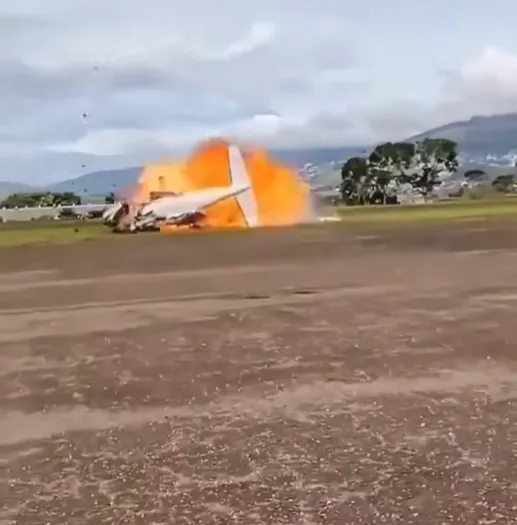
A Devastating Crash at Paramillo Airport
The peaceful morning skies over Táchira, Venezuela, were suddenly disrupted by the erratic roar of an airplane engine, followed swiftly by the terrifying sound of a metal impact and a massive explosion. The catastrophic event deeply shocked residents living near Paramillo Airport. A small twin-engine aircraft, bearing the registration YV-1443, went down mere seconds after departing the runway at around 9:52 a.m.. The crash claimed the lives of both pilots on board, immediately sparking serious concerns regarding regional aviation safety protocols.
Initial accounts indicate that the plane initially accelerated down the runway in a routine manner and initiated its ascent. However, almost immediately after leaving the ground, the aircraft struggled to achieve any significant altitude. Onlookers noted that while the aircraft appeared to be fighting to climb, it only reached a minimal height before losing aerodynamic lift, tilting violently, and dropping back down onto the runway perimeter. The resulting collision was completely devastating, and a intense fire quickly consumed the broken wreckage. Although airport emergency teams rushed to the site instantly, the sheer violence of the impact and the rapid spread of the flames left no chance of survival for the two pilots, who were the sole occupants of the plane.
Technical Theories and the Ongoing Investigation
Aviation officials are currently investigating preliminary clues suggesting that a high-speed tire blowout during the takeoff roll might have caused the pilots to lose control. For smaller planes, a tire failure at such critical speeds can be catastrophic, often leading to extreme structural instability, severe imbalance, or a sudden loss of steering control. Given the brief window of time the crew had as the aircraft left the ground, such a mechanical failure could have left them entirely unable to recover.
Civil aviation investigators in Venezuela promptly secured the accident scene, collected the salvageable flight instruments, and initiated a comprehensive audit of the aircraft’s maintenance records. In an official preliminary update, authorities stated that their analysis would cover every phase of the failed flight, including the initial engine start, the acceleration down the runway, the lift-off phase, and the final impact. A meticulous review of the plane’s mechanical history is underway, with investigators placing particular emphasis on the landing gear assembly, the tires, and any related systems that could have failed during the takeoff run. Furthermore, meteorological conditions during the incident are being evaluated. While initial weather reports point to stable conditions without severe winds or heavy downpours, experts will examine all environmental data to completely eliminate weather as a contributing factor.
Social Media Shock and the Call for Safety Reforms
The gravity of the accident drew widespread public attention after a bystander’s video capturing the final moments of the flight circulated rapidly across various social media platforms. The footage depicts the twin-engine plane barely lifting off the ground before rolling sharply, nose-diving back onto the runway, and instantly erupting into a violent fireball. The video provoked a global wave of sympathy for the grieving families alongside heightened anxieties regarding how vulnerable light aircraft are to sudden mechanical malfunctions.
This fatal accident at Paramillo Airport has reignited intense debates surrounding local aviation safety standards, particularly in a region where numerous private and small-scale aircraft operate alongside aging infrastructure and tight maintenance budgets. In response, several aviation experts are urgently advocating for more stringent technical inspections and enhanced financial backing to guarantee that all operating aircraft strictly adhere to crucial safety mandates.
As the investigation progresses, many vital questions remain unanswered regarding whether an overlooked mechanical defect, a gap in maintenance, or an abrupt, unpreventable failure gave the pilots absolutely no time to react. Ultimately, the tragic loss of airframe YV-1443 serves as a sobering reminder of the inherent risks of aviation and the non-negotiable necessity of unwavering safety compliance. Authorities plan to publish further details as they continue to examine the wreckage and compile more data, while the local aviation community and the families of the deceased pilots wait anxiously for definitive answers.